

Project 3
Ways of Inhabiting – Experiencing Architecture (Space and Sensory)
Narrative
When I was younger, my favourite activity after school hours involved having fun with my closest friends. One of my fondest childhood aspirations was to discover a secluded sanctuary where we could seek refuge and relish unbounded freedom. In my mind, this hidden haven was envisioned as a clandestine retreat exclusively designated for our band, offering us the canvas to craft imaginative escapades shielded from external scrutiny.
Design Process
I was tasked with creating a design for a building and transforming the spatial story into an architectural experience of path-portal-place. Next, I must enhance the sensory journey of my "path-portal-place" by following design principles, structure, materiality, anthropometry, ergonomics, and architectural storytelling through various test models and drawings.
Mock-up Model
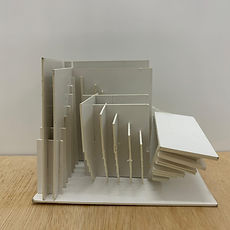

Initially, I found motivation from the hierarchical structure in my past project. I utilize this framework as my base and continue to enhance the path-portal-place. Upon examining the initial prototype, I realized that this design lacks practicality. I enhance it by incorporating additional anthropometrics and ergonomics for increased functionality.
Final Model

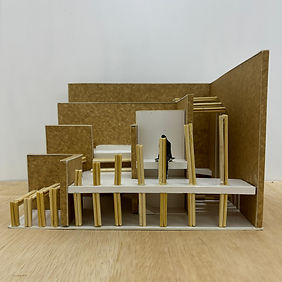


I selected timber as the main material for constructing walls and used concrete for building floors. Timber provides structural support and aesthetic appeal while also creating a welcoming and cozy atmosphere for the user. Concrete gives a firm foundation for the entire structure and creates an industrial and chilly impression for the user. Connecting these two materials with dovetail joints and square indentations offers the user a unique tactile experience upon entering this structure.
Presentation Board


Design Process Sketch Journal


Self-Reflection
Upon completing this project, I came to understand the crucial importance of integrating anthropometrics and ergonomics into all design processes. While a structure may look visually appealing and intriguing, it is equally essential to ensure that it is practical and user-friendly. Considering the physical dimensions, movements, and comfort of people using the space is vital to creating designs that are not only aesthetically pleasing but also functional and accessible.
Furthermore, employing the path-portal-place approach in building design significantly enriches the design process. This approach focuses on the journey through a space, the transitions between areas, and the destinations within a building, offering a comprehensive framework for designing user experiences. By applying this methodology, I can craft diverse environments and tactile encounters that cater to the needs and desires of the users. This holistic perspective allows for a more thoughtful and intentional design, where each element and space is carefully considered to enhance the overall experience and usability of the structure.
